Welcome from the Training Director
Thank you for considering an application to our APA accredited Doctoral Internship in Health Service Psychology. Our training program is an important and integral part of Counseling & Psychological Services. Please browse our training web page to learn more about our Doctoral Internship, and enjoy links to view more about Counseling & Psychological Services, FSU, and Tallahassee! Please feel free to contact me if you have any further questions about our internship program at aspeters@fsu.edu or (850) 644-8255. We look forward to learning more about you in your application!
View our Internship Admissions, Support, and Initial Placement Data
General Information
The Doctoral Internship’s home is Counseling & Psychological Services (CAPS), which is the primary mental health services provider at Florida State University (FSU). The Center’s mission is to enhance the academic experience of students by promoting healthy personal development through brief individual or couples counseling, group counseling, skill enhancement and preventative outreach services. This mission is accomplished within the parameters of a humanistic philosophy that honors and adheres to the individual student’s right to be treated with dignity and respect.
Counseling & Psychological Services was ranked top 20 in the nation according to students in 2023. CAPS is located in the Askew Student Life Center with a satellite office in the Thagard Building. Thagard was added in Spring 2023 to provide additional space for staff, students and interns with improved facilities for art therapy and groups offering movement. Both locations are located centrally on campus and are a 5-minute walk from each other. CAPS also has embedded clinicians in the Law and Film school. The main part of CAPS is in the Student Life Center, which also contains administrative offices for University Housing, a state-of-the-art 600-seat movie and teleconferencing theater, ceramic painting studio (Paint A Pot) and numerous meeting rooms. This exciting facility has become a major center of student activity. Adjacent to the Student Life Center is the Dunlap Student Success Center which houses the nationally renowned FSU Career Center, as well as the Center for Leadership and Service. Also on the same block is the Center for Global Engagement which provides services to international students as well as the entire university.
Counseling & Psychological Services provides full-time Doctoral internships to counseling and clinical psychology students and full and part-time internships to masters’ students in mental health counseling, clinical social work, and art therapy. The Center is accredited by the International Association of Counseling Services (IACS) and is a member of the Association for Psychology Postdoctoral and Internship Centers (APPIC). The Doctoral psychology internship program is accredited by the American Psychological Association (APA). This document describes the Center’s Doctoral psychology internship opportunities.
Video Tour of Counseling & Psychological Services
The University Setting
Florida State University, with an enrollment of 44,000 students, is a Research I university and one of the largest and oldest of the eleven institutions in the State University System. The student body reflects significant representation from all fifty states and over 115 countries. FSU was named the No.8 Best Value College in the nation among public colleges and universities according to U.S. News & World Report’s “Best Colleges 2024” guidebook. U.S. News and World Report also ranked FSU as one of the “Best National Universities for Veterans.”
FSU offers undergraduate and graduate degree programs in over 170 fields of knowledge. The University has particularly strong schools of criminology, psychology, theater, social work, law, education, dance and music. The School of Motion Picture, Television, and Recording Arts has quickly become ranked as one of the premier programs in the country. The National High Magnetic Laboratory, the top research facility of its kind in the world, is located at FSU. Programs in the biological sciences and geography take advantage of the immense biodiversity and unique ecosystems of the Florida Big Bend area.

FSU is located about one mile from downtown Tallahassee. On campus, Gothic structures are combined with modern architecture in a rolling landscape of palms, pines, dogwoods, and sprawling live oaks draped in Spanish moss. Flowering shrubs add year-round color. The campus is undergoing an exciting period of modernization and beautification, with new buildings, restaurants and pedestrian walkways. The E. Leach Center provides students and staff with a state-of-the-art recreation/fitness facility. The newly constructed Student Union offers a variety of dining options and opportunities for student engagement and fun, including a bowling alley, Art Center and Frame Shop, and ClubDownunder Student Productions.

Area cultural offerings include special programs in the dramatic arts, including regular productions from several university and local theaters; musical performances including operas, symphonies, and jazz ensembles; and visual arts displayed both on campus and in a neighboring artisan community. The community ardently supports the FSU men’s and women’s athletic teams. The Football, Track and Field, Basketball, Baseball, Soccer, Softball, Volleyball, Swimming, Golf and Tennis teams are among the best in the nation. FSU consistently has one of the nation’s top collegiate football teams–a team that won the 1993, 1999, and 2013 national titles. The FSU Flying High Circus is also one of the only university-based circus in the world and consistently draws raves for its on-campus and traveling performances.

FSU Visitor Information
Living in Tallahassee
Tallahassee, the state capital, is home to Florida A&M University and Tallahassee State College (formerly known as Tallahassee Community College), in addition to FSU. Tallahassee is a culturally and politically dynamic community with a strong sense of identity. The metropolitan area is rapidly growing with a current population of about 296,544 and is located in the northwestern part of the state, an area called the “Big Bend.” A recent national survey of college towns ranked Tallahassee the second best medium sized city in which to live. There is considerable sunlight with warm, moist summers and mild winters. Tallahassee has gently rolling hills and is covered with beautiful tree-lined streets some of which are protected “canopy roads.” The southern edge of town borders Apalachicola National Forest that spans the forty miles to the Gulf of Mexico. Gulf Coast beaches and recreation begin within a one-hour drive south of Tallahassee and stretch 200 miles to Pensacola. Northern Florida is also known for its unique and refreshing freshwater springs and plentiful wildlife.
Counseling & Psychological Services Staff
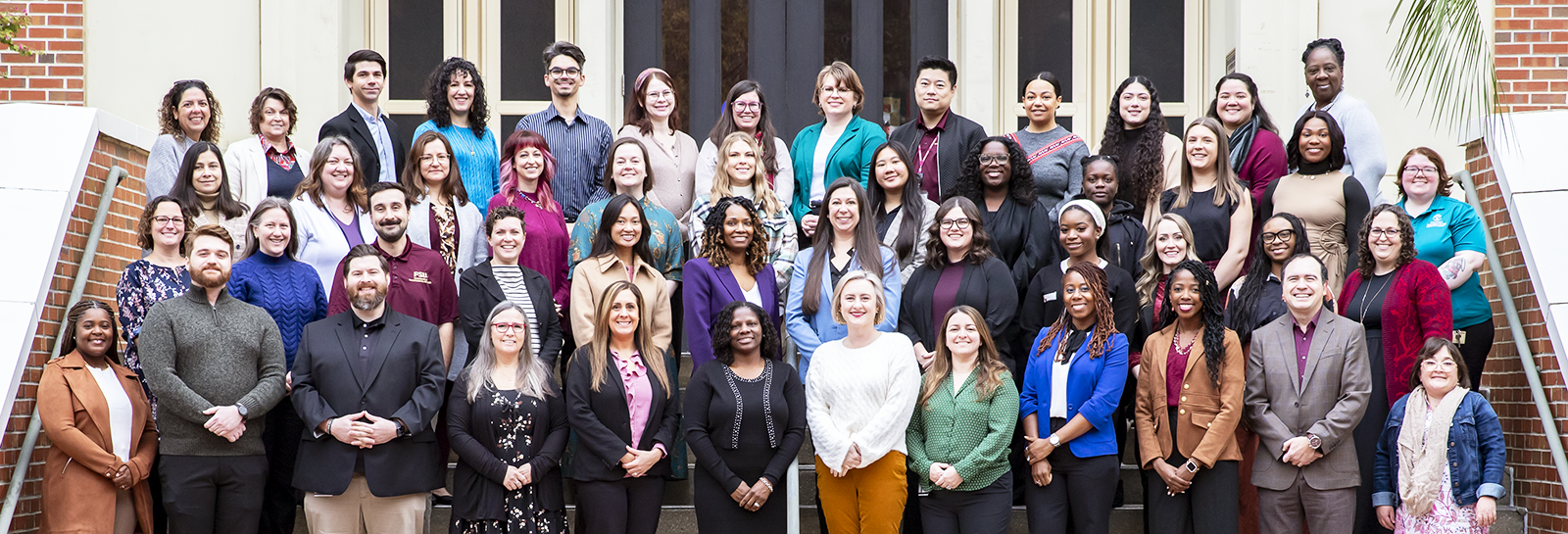
The staff is comprised of professionals from several mental health disciplines, including clinical and counseling psychology, clinical social work, clinical mental health counseling, marriage and family therapy, art therapy and a mental health education coordinator. Typically, there are four Doctoral psychology interns, as well as pre-masters interns, social work interns, doctoral practicum counselors, as well as masters resident(s) and psychology residents. The support staff consists of an office administrator and receptionists. Staff members hold membership in a variety of professional organizations including the American Psychological Association, the Florida Psychological Association, the American Counseling Association, the American Group Psychotherapy Association, the National Association of Social Workers, the American Art Therapy Association, and EMDR International Association.
Leadership Team
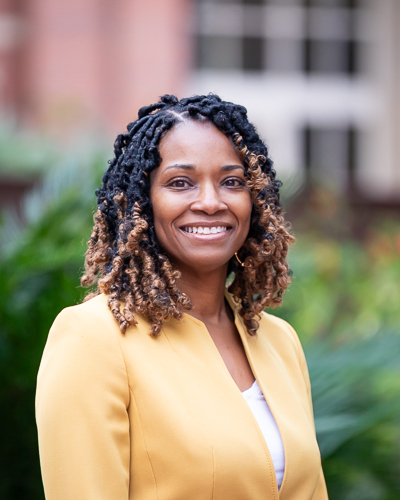
Yvonne Langdon-Maduekwe, Ph.D. – Interim Director & Associate Director for Clinical Operations, Counseling Psychology, Howard University
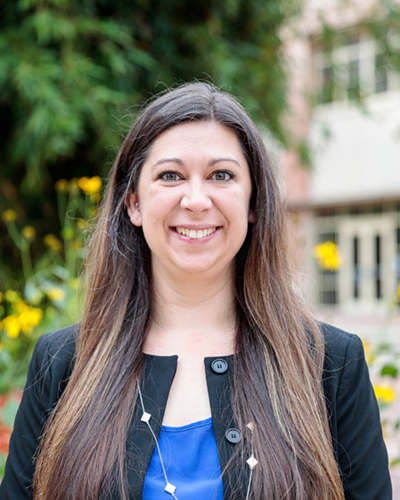
Rebecca Whitfield, LCSW – Associate Director for Outreach and Treatment Coordination, Florida State University
Annette Peters, Ph.D. – Assistant Director and Director of Training, Counseling Psychology, University of Northern Colorado
Katy Fabian, LMHC – Assistant Director for Technology, Florida State University
Lindsay Barbee, LMHC, ATR, MCAP – Assistant Director for Clinical Operations, Florida State University
Primary Supervisors
Terri Duck, Ph.D. – Primary Supervisor and Practicum Training Coordinator, Counseling Psychology, Louisiana Tech University
Erin Gallivan, Ph.D., CGP, HSP – Primary Supervisor and Group Coordinator, Counseling Psychology, University of Georgia
Jessica Johnston-York, Ph.D. – Primary Supervisor and Seminar Facilitator, Texas Tech University
Annette Peters, Ph.D., CGP – Primary Supervisor and Director of Training, Counseling Psychology, University of Northern Colorado
To review additional training staff and contributors, please visit our staff page.
Training Aims and Profession Wide Competencies
The Doctoral Internship in Health Service Psychology at the Florida State Counseling & Psychological Services has the aim of supporting interns in their professional growth and in gaining solid skills in the Profession Wide Competencies through an atmosphere which emphasizes a mentor-apprentice approach and continuous learning. Our training program will provide supervision, modeling, and didactic and experiential learning activities required to successfully practice as a Health Service Psychologist.
It is our belief that close, collegial involvement with psychologist role models provides a phase appropriate learning experience for the interns, allowing for enhancement of their professional identity while further developing their skills and competencies as practitioners. The interdisciplinary environment of CAPS provides a variety of professional involvement and interaction reflective of most post-internship employment settings. In addition to psychologists, interns have routine contact with training staff with expertise in social work, mental health counseling, art therapy, and addictions treatment. Interns also have the opportunity to work with medical staff at University Health Services. The internship year is clearly a time of transition, when interns must bridge and integrate the science of their academic training with the practice necessitated by their developing role as professional psychologists. It is the program’s philosophy that mentoring provides our interns an opportunity to internalize and consolidate that professional role and makes the transition from graduate student seem both possible and worthwhile.
Developmental considerations are foremost in our training approach. We recognize the need and necessity for our interns to apply, in an intensive manner, the science of psychology they have learned in their graduate programs and further develop competencies in assessment, diagnosis, intervention and consultation. We strive to provide a supportive environment that allows interns to take on increasing levels of responsibility over the course of the internship, thereby building their confidence along with their competence. As part of this process, interns have the opportunity to observe and collaborate with senior clinicians in a variety of activities ranging from individual and group therapy to consultation and outreach. As the interns and their supervisors become comfortable with the intern’s skill level, supervisors function more as available and consultative mentors.
The Center views interns as professional colleagues and vital staff members whose contributions are encouraged and valued. The individual intern’s areas of strength and interest are incorporated into the yearlong experience. Through supervision and training, we assist the intern in identifying areas requiring further growth, while exposing them to a broad range of theoretical orientations and specialized expertise of the staff that will enhance their professional development. Interns are thereby afforded the opportunity to pursue somewhat individualized training experiences based on their experiences, interests, and goals.
The internship is a vital component of CAPS, and as such, the aims of intern training are aligned with the service goals of CAPS. Thus, the provision of high quality, informed and ethical treatment to a large and diverse student population is of paramount importance. Recognizing the educational mission of FSU, it is also important for the internship to support this mission through the training of interns, engagement in scientific inquiry, and outreach and consultation to the greater university community.
The overall goal of the Doctoral Internship is to prepare Counseling and Clinical Psychology Interns to function ethically, competently and independently as Health Service Psychologists. The training is generalist in nature, aimed at expanding the intern’s experience and awareness of self and other, while refining skills necessary to practice psychology effectively. The internship attempts to foster personal growth and self-confidence, along with a sense of professional identity.
Application and Selection
Doctoral psychology interns are selected through national searches following APPIC guidelines. As an APPIC member, Counseling & Psychological Services Doctoral Psychology Internship participates in the APPIC Internship Matching Program (Program Code 122311). Applicants must be registered with the Matching Program to be eligible for selections. An Applicant Agreement package can be obtained from the National Matching Service through the Matching Program web site at www.natmatch.com/psychint. Psychology interns must also be currently enrolled in an APA accredited doctoral program in Clinical or Counseling psychology and have full clearance from their home program to apply for internship. Practica preparation requirements include successful completion of at least two practica with a minimum of at least 400 interventions hours which have been completed prior to the application due date. Applicants must have successfully defended their dissertation proposal and passed their Comprehensive Exams by the end of December to be eligible for consideration.
FSU CAPS Internship Program reaffirms its commitment to a policy of equal opportunity. We train interns to be well-rounded professional psychologists with the competencies to serve clients from a wide range of backgrounds and experiences. In providing this training, we commit ourselves to creating a supportive training environment that allows for self-exploration and the development of cognitive flexibility. Our grievance procedure, due process policy, and administrative policies for interns are included in our “Doctoral Internship Training Program Handbook - Policies and Procedures” and are available upon request.
Application is done by utilizing the AAPI Online which can be accessed on the APPIC website at http://www.appic.org. Applications must include a cover letter, the application form, an official graduate transcript, a vita, and three letters of recommendation. Cover letters must include specific reasons for seeking a Doctoral Internship at Counseling & Psychological Services at Florida State University. The AAPI Online must be submitted by November 3rd. We currently have four intern positions. Any questions regarding the internship or the application process can be addressed to:
Annette Peters, Ph.D., CGP Training Director
Counseling & Psychological Services
Reuben O’D Askew Student Life Center
942 Learning Way, Suite 250
Florida State University
Tallahassee, FL 32306-4175
Phone: 850-644-TALK (8255)
Fax: 850-644-3150
e-mail: aspeters@fsu.edu
Applicants will be notified regarding their selection for an interview no later than December 15th.
All interviews will be conducted via Zoom in either mid-December or early to mid-January. Applicants who match to our program but do not successfully pass a background check will not be employed as doctoral interns (APPIC Match Policy 8b states, “Appointments of applicants to internship positions may be contingent upon the applicants satisfying certain eligibility requirements. Such eligibility requirements must be clearly specified in the internship programs’ written materials and provided to applicants in advance of the deadline for submitting rankings for the APPIC Match.”). Applicants are welcome to discuss any questions about this procedure with the Training Director.
Please note: This internship site agrees to abide by the APPIC Policy that no person at this training facility will solicit, accept or use any ranking-related information from any intern applicant.
Policy Regarding Academic Programs Requesting Additional Evaluation Materials or Contracts
Interns at Counseling & Psychological Services receive ongoing evaluative feedback from supervisors throughout the training year. These evaluations are comprehensive, are based on our program’s training model, philosophy, goals and objectives, and competencies and benchmarks established by our profession. At mid and end year, the Florida State University Counseling & Psychological Services Director of Intern Training sends the Academic Training Director a copy of our internship’s evaluation of the intern for that portion of the internship year. Therefore, if you are enrolled in an academic training program that requires additional training contracts and/or evaluations, these will not be completed by the Florida State University training staff. Your program may choose to use the data from the Florida State University Counseling & Psychological Services evaluations to complete their own forms. You are strongly encouraged to consult with your Director of Clinical Training or the Florida State University Counseling & Psychological Services Training Director if you have questions about this policy.
The doctoral internship in Health Service Psychology at CAPS is accredited by the Commission on Accreditation of the American Psychological Association. CAPS is accredited by the International Association of Counseling Services (IACS). For any questions related to this program's accreditation status, the APA Office of Program Consultation and Accreditation can be reached at:
Office of Program Consultation and Accreditation
American Psychological Association
750 1st Street, NE, Washington, DC 20002
Phone: (202) 336-5979 / E-mail: apaaccred@apa.org
Web: www.apa.org/ed/accreditation
Orientation
Doctoral internships start the beginning of August (August 1st unless on a weekend). Orientation of new interns includes several weeks of formal orientation process conducted prior to the fall semester. This orientation is designed to help new interns begin their training at Counseling & Psychological Services. The purpose of the orientation program is to introduce new doctoral interns to the Center’s philosophy, aims, competencies, organization, staff, and policies and procedures. Included are mini-seminars outlining crisis counseling, intake procedures, risk assessment, forms and documentation, and supervision requirements. In addition, tours are conducted of other relevant resources on campus. An important part of orientation is to begin the year long process of developing mentoring relationships with all of the staff. The orientation process is also constructed to provide opportunities for the new intern class to learn about each other and develop the trust and comfort which provides a supportive relationship among the intern cohort.
Seminars
Weekly training seminars focus on themes related to the counseling needs of the Center’s clientele. Treatment considerations, including a variety of approaches and intervention modes, are highlighted. The training seminars are organized by the training director and conducted by CAPS staff members and guest specialists from the university and local community. Trainings covers a vast array of topics including, but not limited to eating related concerns, risk management and safety planning, professional development, treatment for mood related concerns, etc. The array of topics reflects the many presenting concerns clients face in this counseling center. There are also ongoing monthly seminars in areas such as Assessment, Group Therapy, and Supervision to facilitate intern development of skills.
All interns are supervised in the provision of individual, couples and group counseling. Supervision is based primarily on case discussions and review of video recordings of sessions. Interns typically co-lead group therapy with experienced staff members with whom they can discuss group issues. Training in psychological assessment is centered around increasing trainees’ familiarity with a variety of assessment instruments commonly used in a university counseling setting. This is accomplished through group seminar meetings, individual supervision with the assessment coordinator and with the intern’s primary supervisor, careful review and feedback of assessment report writing, and review of session recordings. Training emphasizes the utility of Therapeutic Assessment, whereby trainees learn how to use assessment instruments as the primary therapeutic intervention, a method that dovetails nicely with the brief treatment model employed at CAPS.
Interns receive a minimum of two hours per week of individual supervision and two hours per week of group supervision (one hour focused on individual cases and one hour focused on group therapy). Frequent informal supervision and/or consultation with other staff members (of whatever discipline seems appropriate for a given situation) is encouraged and expected in response to issues that arise between formal supervision sessions. Licensed Clinical and Counseling Psychologists provide primary supervision of Doctoral Psychology Interns. The Training Director also meets weekly with the interns to discuss any issues of concern and to promote the growth of professional development throughout the year.
Majority of trainings are provided face to face onsite. There may be some trainings that are provide via zoom if a presenter is unable to travel to the Center. Supervision is also primarily face to face, but if extenuating circumstances arise virtual options may be available.
Interns also receive formal training in providing supervision through the supervision of doctoral practicum students from the FSU’s Counseling and Clinical Psychology programs. The interns attend monthly Supervision Seminars in the fall and spring semesters. During the time they provide supervision, they receive Supervision of Supervision with both an individual licensed psychologist, as well as during the Supervision Seminar.
Supervision
All interns are supervised in individual, couples, and group counseling services. Supervision focuses on case discussions, review of video recordings, and co-leading therapy sessions. Assessment training emphasizes practical application through Therapeutic Assessment models, report writing feedback, and session video reviews.
Interns receive:
- 2 hours of weekly individual supervision
- 2 hours of weekly group supervision (1 hour for individual cases, 1 hour for group therapy)
Primary supervision is provided by licensed Clinical and Counseling Psychologists. The Training Director also meets weekly with interns for additional professional development discussions.
Most trainings and supervisions occur face-to-face on site. If necessary, Zoom sessions may be used for external presenters or under special circumstances.
Interns also receive formal training in providing supervision by working with doctoral practicum students. Supervision training includes monthly Supervision Seminars and "Supervision of Supervision" meetings with licensed psychologists.
Clientele
CAPS offers services to all students enrolled at FSU. The center's clientele varies widely, with an average age of 24 years and an age range of approximately 17 to 60 years. There are a high proportion of seniors and graduate students and two-thirds of the clients are female. Recent statistics indicate the following breakdown: 48% Caucasian, 28% Multi-Racial, 13% Black or African American, 2% Hispanic, 7% Asian.
Services
Individual Therapy
CAPS offers mental health services in the form of brief individual treatment . Counseling services are short-term and time-limited to maximize service provision to a wide range and large number of students. Most students who request counseling services are served appropriately and sufficiently within the brief model; Doctoral interns have the opportunity to carry several clients for more extended treatment when deemed treatment appropriate within the scope of our clinical setting.
Group Therapy
The Group Psychotherapy training component is a major focus of the Doctoral internship and is based upon the idea that we learn best through mentored apprenticeship. Interns will be assigned to one of four currently running process groups that they will co-lead with the Group Coordinator or one of our Certified Group Psychotherapists (CGP). Interns co-lead this group for the entire yearlong internship with the goal of developing expertise in group leadership, member selection, co-therapy and other aspects of group psychology as it relates to clinical practice. In addition, interns will have the opportunity to co-lead an additional group with another member of the FSU CAPS staff following the fall semester of the internship year. Further, interns will participate in Group Supervision of Group Therapy and the Group Administration Meeting on a weekly basis with the Group Coordinator in addition to the monthly Doctoral Specialty Seminar on Group Psychotherapy. Interns will also be able to engage in various consultation opportunities on campus with the Group Coordinator.
Couples Counseling
Couples counseling is offered when appropriate. Client partners and spouses who are not FSU students are ineligible for individual services; however, they may be treated in conjunction with an eligible student. Interns who are interested are encouraged to co-lead with an experienced licensed staff member.
Consultation
Staff and interns regularly provide consultation to the university community. Interns are often involved in providing consultation and/or presentations to University Housing, the Victim Advocate Program, Office of Accessibility Services, the Eating Disorder Treatment Team, Sorority and Fraternity Life, the Center for Global Engagement, and the Center for Academic Retention and Enhancement. CAPS also has contact with University Health and Wellness and other departments of the Division of Student Affairs, the FSU Police, the Medical Response Unit Tallahassee area hospitals, human services agencies, and private practitioners.
Typical Week
Professional Development
| Seminar/Training | 3 ½ hours |
| Group Supervision | 2 hours |
| Individual Supervision - Primary | 2 hours |
| Individual Supervision of Group Work | 1 hour |
| Intern Lunch | 1 hour |
Service
| Individual and Couples Counseling | 14 hours |
| Group Counseling | 1 ½ hours |
| Intake Sessions | 2 hours |
| Outreach/Consultations | 1 hour |
| Supervision of Practicum Student | 1 hour |
Administration
| Staff Meetings/Case Conference | 1 hour |
| Committee Meetings | 1 hour |
| Case Notes and Administrative Duties | 5 hours |
| Research, Professional Reading, etc. | 4 hours |
Interns rarely exceed a regular 40-hour work week and typically find time for research, professional reading and other activities of their choosing. Center activity is quite “seasonal” by nature. The demand for services tends to steadily increase during fall and spring semesters. Clientele flow tends to be light during semester breaks and moderate from May to August. Interns should expect to carry substantial caseloads during peak periods so that they can “average” 25% of their time in direct client contact across the whole of their internship. Doctoral psychology interns work 40 hours per week primarily during the Center’s business hours.
Benefits
Doctoral interns receive a stipend of $37,500 (via biweekly pay periods) and use of university facilities, libraries, and computer equipment. Each intern has a private office and computer with Internet access. Interns are eligible to purchase low-cost health insurance available for OPS employees at FSU. CAPS observes state and national holidays (approximately 9 days per year) and is often closed for part of the winter holiday. Interns receive 10 days of combined annual leave and sick leave for the year, in addition to up to 5 days of professional development leave. Interns are allowed up to $500 toward professional conference/workshop expenses. Student membership in the Florida Psychological Association is also provided to allow interns to participate in trainings and professional development activities conducted by the FPA during the internship year.
Performance Expectations for Internship Completion
In order to graduate from the internship and receive a Certificate of Completion, interns must meet the following exit criteria::
Doctoral Psychology Interns
- Completion of the full 52-week internship and acquisition of 2000 intern hours.
- Full participation in all required activities (e.g. meetings, supervision, training seminars)
- Completion of all required internship tasks and the supervisor and internship evaluations.
- Performance of a minimum of 500 direct service hours.
- Adherence to the Ethical Principles for Psychologists (APA, 2002 with 2010 Amendments).
- Obtaining the Minimum Level of Achievement (MLA) on the end-of-year evaluation for each Profession Wide Competency, which is a “3” (Satisfactorily Proficient). This requires a “3” on each element of each Profession Wide Competency.
Former Interns
2025-2026
- Avital Simanian, Ph.D., Clinical Psychology, Alliant IU/CSPP-Los Angeles California School of Professional Psychology
- Cody Hatcher, Psy.D., Clinical Psychology, Adler University-Chicago School of Professional Psychology
- Courtney Williams Ph.D., Counseling Psychology, Auburn University
- Mia Asuncion, Psy.D., Clinical Psychology, George Fox University
2024-2025
- Robert Billings - Clinical Psychology, Northern Arizona University
- Cikylie Hughes - Clinical Psychology, Adler University
- Ashley Riley - Counseling Psychology, Howard University
- Dimitra-Sofia Nemerovsky - Clinical Psychology, Alliant Intl/California School of Professional Psychology-San Francisco
2023-2024
- Melanie Williams - Clinical Psychology, Divine Mercy University-Institute for the Psychological Sciences
- Michael Di Martino - Clinical Psychology, University of Hartford
- Andrea Lacayo - Clinical Psychology, Nova Southeastern University
- Brooke Collins - Clinical Psychology, Nova Southeastern University
2022-2023
- Julia Erin Morpeth-Provost 0 Counseling Psychology, University of Texas-Austin
- Kelly Dillon - Counseling Psychology, Florida State University
- Madison Estrada - Counseling Psychology, University of Southern Mississippi
- Yoojin Cho - Clinical Psychology, Chicago School of Professional Psychology
2021-2022
- Olivia DeAngelo - Counseling Psychology, Tennessee State University
- Pamela "Mandy" Hughes - Clinical Psychology, Biola University
- Dan Krizan - Clinical Psychology, Nova Southeastern University
- Sara Staley - Clinical Psychology, Nova Southeastern University
2020-2021
- Michelle Gad - Clinical Psychology, Adler University-Chicago
- Melissa Hinely - Clinical Psychology, Georgia Southern University
- Michael Nackashi - Clinical Psychology, Nova Southeastern University
- Grace Waite - Clinical Psychology, William James College
2019-2020
- Madison Allen - Clinical Psychology, University of Indianapolis
- Becky Conrad - Clinical Psychology, Georgia Southern University
- Bryan Goldin - Clinical Psychology, Nova Southeastern University
- Jessica Langley - Clinical Psychology, Argosy-Atlanta
2018-2019
- Jenna Banks - Clinical Psychology, Nova Southeastern University
- Camille Benito - Clinical Psychology, Nova Southeastern University
- Nicole DeFerrari - Counseling Psychology, Chattam University
- Wendy Gonzalez-Canal - Counseling Psychology, Ball State University
2017-2018
- Claudine Anderson-Atkinson - Counseling Psychology, Georgia State University
- Kevin Burchby - Clinical Psychology, William James College
- Shala Cole - Clinical Psychology, The Chicago School of Professional Psychology
- Erin Smith - Clinical Psychology, Wayne State University
2016-2017
- Shemika Brooks - Clinical Psychology, Rutgers University
- Joanna Menendez - Counseling Psychology, Georgia State University
- Philip Randall - Clinical Psychology, East Tennessee State University
- Tyme Rodriguez - Clinical Psychology, Argosy-Washington DC
2015-2016
- Maria Drvoshanov - Clinical Psychology, Florida Institute of Technology
- Kulkiran Nakai - Clinical Psychology, Adler School of Professional Psychology
- Brett Woods - Counseling Psychology, University of Missouri-Columbia
2014-2015
- Brittani Berbett - Clinical Psychology, Saint Louis University
- Kelly Kit - Clinical Psychology, University of Hartford
- Patricia Monaghan - Clinical Psychology, Florida Institute of Technology
- Annette Peters - Counseling Psychology, University of Northern Colorado
2013-2014
- Nicholas Beck - Counseling Psychology, University of North Texas
- Lisa Denton - Counseling Psychology, Indiana University
- Adam Dziedzic - Counseling Psychology, Oklahoma State University
- Victora Nguyen - Clinical Psychology, Loma Linda University
2012-2013
- Hillary Cagle - Clinical Psychology, Nova Southeastern University
- Erica Johnson - Clinical Psychology, Florida Institute of Technology
- Abby Nethaway - Counseling Psychology, Ball State University
- Brett Swords - Counseling Psychology, University at Albany
2011-2012
- Jennifer Bickell - Counseling Psychology, Baylor University
- Mikhail Bogomaz - Clinical Psychology, Argosy University - Chicago
- Christopher Hanes - Counseling Psychology, Indiana University – Bloomington
- Craig Asselin - Clinical Psychology, James Madison University
2010-2011
- Randi (Johnson) Mackintosh - Clinical Psychology, Florida Institute of Technology
- Sandra Rodriguez-Siuts - Counseling Psychology, Texas Tech University
- Marcee Turner - Counseling Psychology, University of Notre Dame
- Keya Wiggin - Counseling Psychology, Indiana State University
2009-2010
- Daniel Goldman - Counseling Psychology, Iowa State University
- Shawn Levstek - Clinical Psychology, Argosy University - Tampa
- Luis Romero - Counseling Psychology, Indiana State University
- Theresa Welles - Counseling Psychology, Florida State University
2008-2009
- Sung Kim - Counseling Psychology, University of Texas
- Lori (Roop) Bristow - Clinical Psychology, George Mason University
- Megan Shiles - Counseling Psychology, University of Akron
- Julie Swanson - Clinical Psychology, Miami University of Ohio
2007-2008
- Chris Cousins - Counseling Psychology, Purdue University
- Paul Poteat - Counseling Psychology, University of Illinois – Champaign-Urbana
- Shannon Salter - Counseling Psychology, Auburn University
2006-2007
- Adina Aldea - Counseling Psychology, University of Florida
- Tamara (Young) Richardson - Counseling Psychology, Oklahoma State University
2005-2006
- Marios Argyrides - Counseling Psychology, Tennessee State University
- Courtney Ramous - Clinical Psychology, Florida School of Professional Psychology (Argosy-Tampa)
2004-2005
- Michelle (Marcus) Rothschild - Clinical Psychology, Argosy University (Atlanta)
- Corine Samwel - Clinical Psychology, Florida State University
2003-2004
- S. Joseph DeWitz - Counseling Psychology, Ohio State University
- Rosanna DiChiro - Clinical Psychology, Nova Southeastern University
- Julie Hawkins - Counseling Psychology, University of Miami
2002-2003
- Allison (Broadbent) Vandenhouten - Clinical Psychology, Nova Southeastern University
- Naoya Izawa - Clinical Psychology, University of Hartford
- Robert "Jake" Jacobs - Counseling Psychology, Texas A&M University
2001-2002
- Nick Maccarone - Clinical Psychology, Nova Southeastern University
2000-2001
- Joseph Cheries - Clinical Psychology, Florida Institute of Technology
- Keely Waters Kaklamanos - Counseling Psychology, Florida State University